
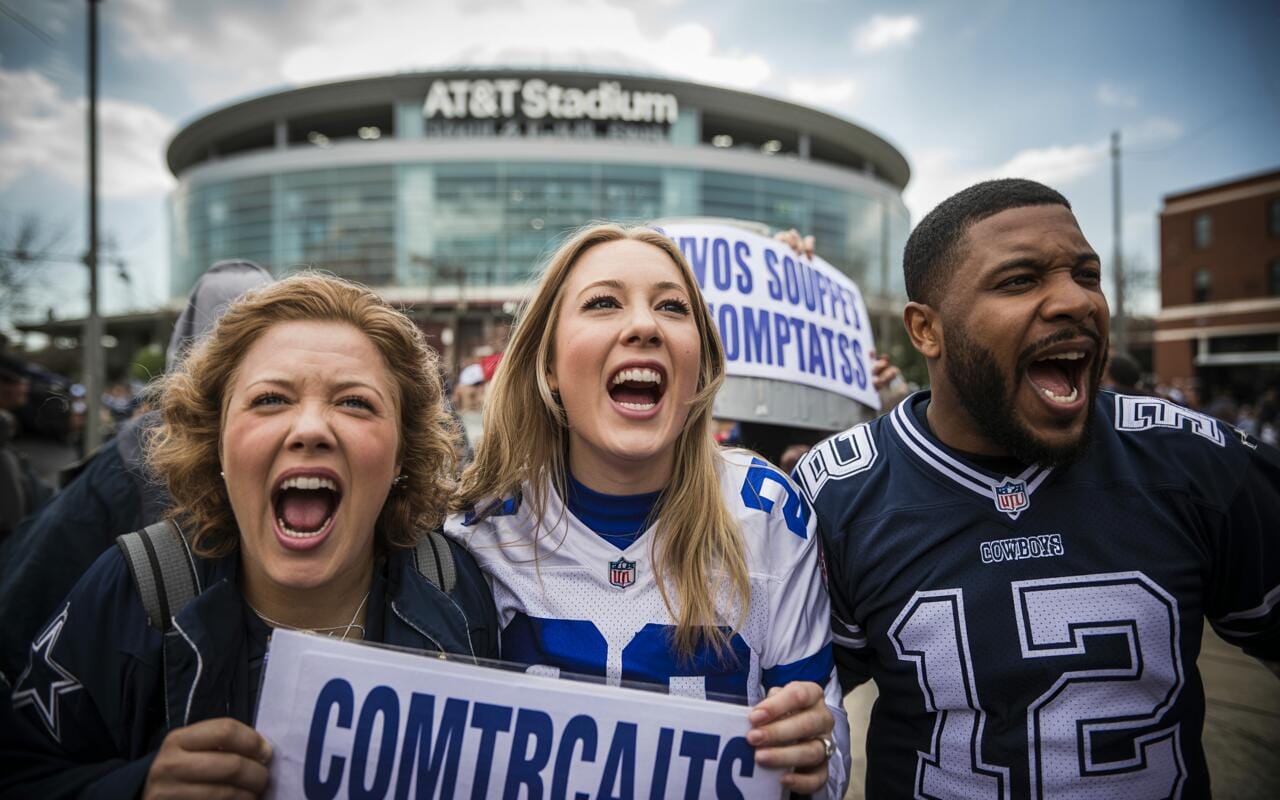

The Dallas Cowboys have turned contract negotiations into an expensive art form—one that’s cost them dearly. While most NFL franchises rush to lock up their stars with team-friendly deals, Dallas seems content to let talks drag on, watching costs spiral upward as market values climb.
Dak Prescott’s Drawn-Out Deal Drama
Back in 2019, Prescott wrapped up his rookie contract having proven himself as a reliable starter. The smart money said extend him now—while his price tag remained reasonable. But Dallas balked when Prescott’s camp pushed for north of $30 million annually.
What followed was a two-year dance with franchise tags that ended up costing the organization big time. Prescott eventually inked not one but two record-breaking deals, becoming the NFL’s highest-paid quarterback by average annual value. The kicker? Those 2019 contemporaries like Carson Wentz and Jared Goff signed for significantly less.
A quick strike in 2019 could have saved Dallas roughly $50 million across Prescott’s contracts. Instead, the prolonged saga handed all the leverage to Prescott, who secured unprecedented protections including no-trade and no-tag clauses that essentially tied the franchise’s hands.
CeeDee Lamb’s Expensive Wait
The receiver market was about to explode in 2023—anyone paying attention could see it coming. After Lamb’s breakout third season, the window was wide open for Dallas to strike a reasonable deal. But they waited.
By the time they finally got serious in late 2024, elite receivers like Justin Jefferson and Ja’Marr Chase had already reset the market ceiling. Lamb’s eventual extension reflected these new benchmarks, costing Dallas an estimated $14 million more than what an earlier agreement might have required.
The delay wasn’t just costly—it was predictably costly. The receiver market’s trajectory was clear to anyone watching league trends.
Micah Parsons: The Most Expensive Mistake Yet
If Prescott and Lamb were costly miscalculations, Parsons represents the Cowboys’ master class in contract bungling. Eligible for an extension in 2024, the All-Pro edge rusher instead played out his rookie scale, watching peers like Nick Bosa, T.J. Watt, and Myles Garrett cash in with massive deals.
Now Parsons’ eventual extension figures to dwarf Watt’s $41 million annual salary—potentially hitting $43 million per year. The delay could cost Dallas an extra $20 million compared to striking early. Making matters worse, Parsons publicly requested a trade in 2025, fed up with the organization’s sluggish approach.
It’s hard to imagine a cleaner example of contract mismanagement having real-world consequences on team chemistry.
The Bottom Line: $84 Million Down the Drain
Add it all up, and these three contract delays have likely cost the Cowboys at least $84 million. That doesn’t even account for the lost flexibility from Prescott’s no-tag clauses or the ripple effects these drawn-out sagas have had on other negotiations.
For context, that’s real money even for the NFL’s most valuable franchise. More troubling, it’s money that could have been deployed elsewhere—building depth, retaining role players, or upgrading weak spots on the roster.
Teams like New England and Philadelphia have mastered the opposite approach: strike early, strike smart, and keep everyone happy. Dallas seems determined to learn these lessons the hard way, paying premium prices while creating unnecessary drama.
What’s Behind Dallas’ Stubborn Strategy?
Several theories circulate around Valley Ranch about why the Cowboys persist with this approach:
Media Circus Theory: Some suggest Jerry Jones enjoys the spotlight that comes with high-profile contract standoffs. But the overwhelmingly negative coverage and fan frustration make this seem like a poor publicity strategy.
Cash Flow Management: Delaying signings can temporarily ease salary cap pressure, but the Cowboys’ mid-tier ranking in recent cash spending suggests money isn’t the primary constraint here.
Jerry’s Hands-On Approach: Jones remains deeply involved in personnel decisions, though the team’s growing analytics department suggests decision-making has become more complex. There might be internal disagreements about timing and terms.
Injury Paranoia: Jones has mentioned injury concerns as justification for hesitation. But the Cowboys have extended injury-prone players before, and publicly questioning Parsons’ durability seems counterproductive at best.
The reality probably combines organizational inertia, reluctance to set new market benchmarks, and communication breakdowns with player representatives.
The Cowboys’ pattern of delayed negotiations has burned through millions while alienating their biggest stars. As other franchises demonstrate the value of proactive, player-friendly deals, Dallas continues learning expensive lessons about the true cost of hesitation.
