
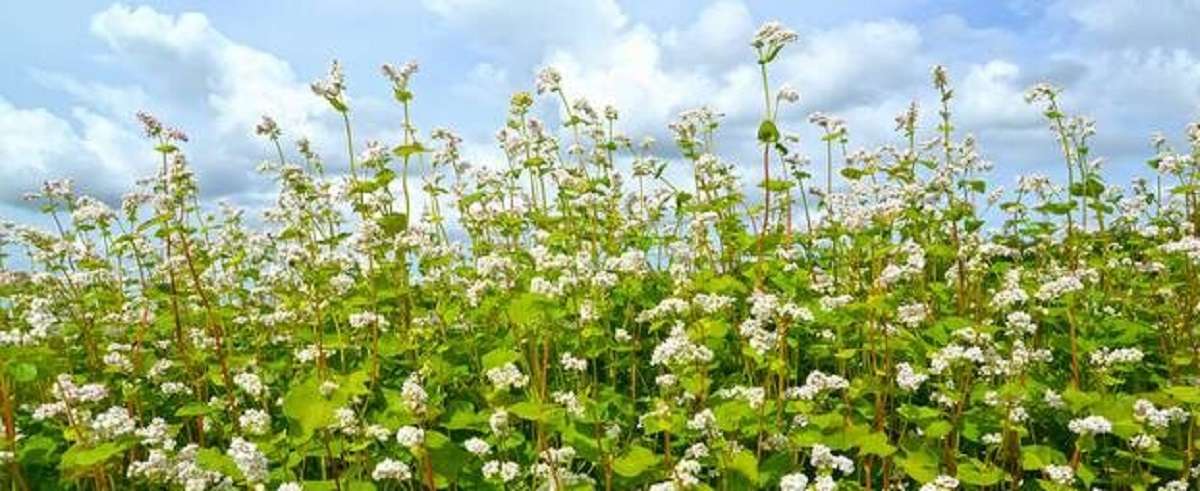

For centuries, buckwheat carried an unfortunate reputation — seen as the humble fare of rural peasants, far removed from the prestige of wheat bread. In the mid-19th century, agricultural publications dismissed it as a “crop for the poorest and most backward regions,” unworthy of wealthier tables. Soft wheat, by contrast, produced the coveted white bread, light and airy, whose pale crumb once symbolized purity and divine favor. Buckwheat offered no such elegance.
The “black wheat” that isn’t wheat at all
Because buckwheat is not suitable for bread-making, it was eaten as porridge, thick gruel, or flat pancakes, serving as a staple for poorer communities. During food shortages, it became a lifeline, remaining affordable when the price of wheat soared. In Brittany, it’s still called “blé noir” (black wheat), though botanically it’s no wheat at all. True wheats belong to the Triticum genus in the grass family (Poaceae), while buckwheat is a Polygonaceae, related to sorrel and rhubarb. Technically, it’s a pseudo-cereal — not a grain in the strict botanical sense, but nutritionally similar thanks to its starchy, long-lasting seeds. The term “black” refers to the dark grey or brown color of its small, pyramid-shaped seeds, and it has also been known by many local names, from brown wheat to Barbary wheat.
From staple to decline
Buckwheat once covered vast stretches of French farmland, thriving in poor, acidic soils where wheat couldn’t grow. But its decline began in the late 19th century. By the end of World War II, the cultivated area had collapsed to just 22,000 hectares — most of it in Brittany — compared to 700,000 hectares a century earlier. In a France that was urbanizing, growing wealthier, and shifting its eating habits, buckwheat’s image as a “poor man’s food” sealed its near disappearance from everyday diets.
