


Have you ever wondered how your heart and lungs hold up as the years tick by? A simple timed run—or brisk walk—can offer surprising clarity. Lace up your trainers and either jog for 12 minutes on a flat course or stroll a full mile (1.6 km) as quickly as feels safe. The goal isn’t to set a personal record, but to gauge your cardiovascular fitness. When I tried this on a damp Saturday morning park run, my pulse spiked more than I expected—an eye-opener that led me to swap evening TV for a quick stroll. For deeper insight, consider a wearable heart-rate monitor: the American Heart Association highlights that tracking beats per minute helps pinpoint areas for improvement.
Measure your strength with push-ups
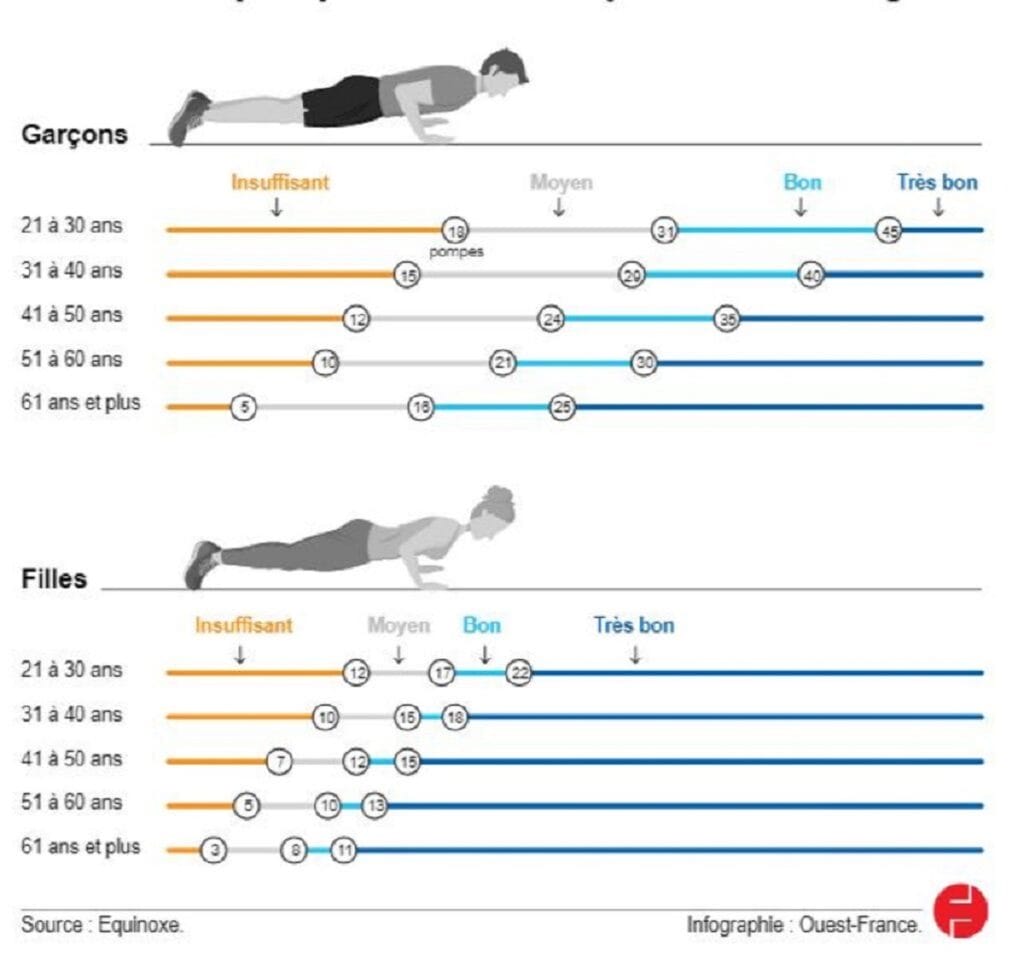
Push-ups remain a timeless marker of upper body strength and muscular endurance. Begin in a plank position—hands under shoulders, body in a straight line—and lower yourself until your chest almost kisses the floor. Then press back up. Count how many you can do in one go, resting only when your form falters. During a recent fitness challenge at work, colleagues and I discovered our numbers varied wildly—proof that age isn’t the only factor. The American College of Sports Medicine notes that women in their fifties who manage 15–20 push-ups are in excellent company, while men in their forties aiming for 20–30 reps can feel confident about their tone and stamina.
Strengthen your core with the side plank
Core stability underpins every movement we make, from lifting groceries to twirling on the dancefloor. The side plank is a perfect test: lie on your side, prop yourself on one elbow, stack your feet, and lift your hips into a straight line. Hold this position as long as you can—30 seconds is a solid starting point, 45 seconds places you above average, and a full minute flags you as a real enthusiast. I recall balancing on a chilly beach at dawn, the sea breeze challenging my concentration, yet surprising me with how engaged my core muscles felt. Strength here means better posture, fewer back aches, and more confidence in everyday tasks.
Stand up without assistance
Finally, mobility and balance: sit comfortably on the floor, then rise to standing without using your hands. Sounds simple, yet it demands leg strength, coordination, and a dash of nerve. If you breeze through, you’ve got the trifecta of agility, power and equilibrium. If you hesitate, that’s your cue to add more squats or gentle balance drills into your routine. During a family picnic last summer, I challenged my aunt to this move—she surprised herself, popping up with ease, and promptly booked herself a tai chi class to keep it sharp.
Whether you fly through these four tests or find areas to fine-tune, each reveals a snapshot of your current fitness. Use the results as motivation to adjust your routine—be it a daily walk, a few push-up sets, or a handful of planks. As Linda P. Fried, Dean of the Mailman School of Public Health at Columbia University, reminds us, exercise is nothing short of a “magic pill” for feeling younger at every age. So go on—give these moves a whirl and discover just how fit you really are.
