
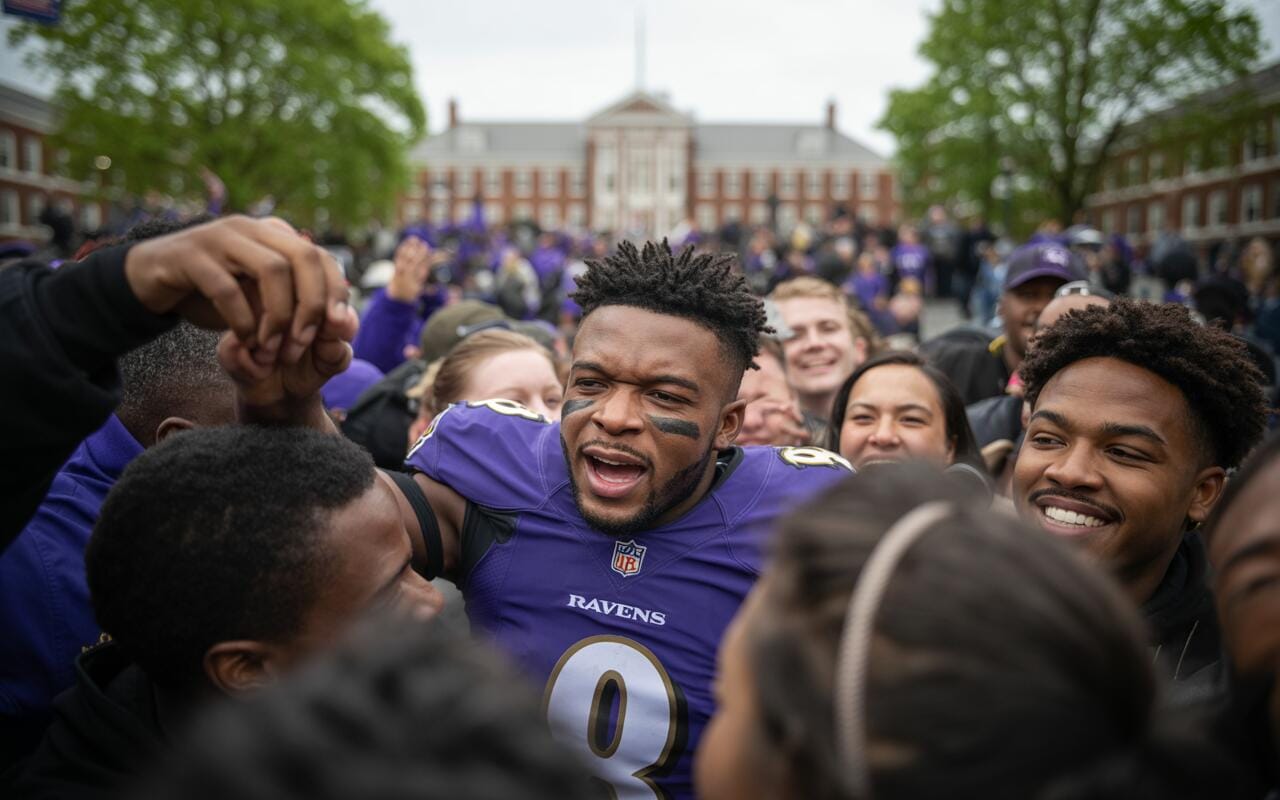

Carson Vinson, Baltimore’s fifth-round selection in the 2025 NFL Draft, carries a distinction that sets him apart from every other player chosen this year. He’s the sole draftee from a historically Black college or university (HBCU). His unwavering commitment to Alabama A&M and his direct path from HBCU football to the NFL represents something increasingly rare in today’s college landscape.
Bucking the Transfer Portal Trend
While talented players across college football chase bigger programs and lucrative deals, Vinson planted his flag at Alabama A&M for the long haul. He became a four-year starter, weathering the storm of constant transfer portal speculation. Markus Lawrence, who coached Vinson’s offensive line at Alabama A&M before moving to South Carolina State, admits he held his breath each transfer window.
\”He could’ve chased those bigger paydays like so many others,\” Lawrence reflects. \”But Carson chose loyalty over opportunity.\” That loyalty came with a cost, though. Vinson takes pride in his HBCU roots, yet he’s candid about his frustration—being the only draft pick among 21 HBCU programs competing at the FCS level this year stings. Too many deserving players got passed over, in his view.
Making His Mark Against Elite Competition
Vinson’s invitation to the 2025 Senior Bowl marked a breakthrough—the first HBCU player invited in two years. Down in Mobile, Alabama, he didn’t just participate; he dominated. His one-on-one battles, particularly against Cincinnati’s first-round pick Shemar Stewart, turned heads throughout the week.
The NFL Scouting Combine provided another stage to showcase his abilities. Among offensive linemen, Vinson posted top-15 numbers in the 40-yard dash, broad jump, and three-cone drill. These weren’t just respectable showings—they were statement performances.
Throughout the draft process, something special happened. Representatives from every HBCU reached out with support and encouragement. \”We compete against each other on Saturdays,\” Vinson explains, \”but beyond those rivalries, we’re family.\”
The HBCU Draft Drought
Recent NFL drafts tell a sobering story for HBCU football. Early-round selections have become almost extinct. Vinson joins an exclusive club—just the second player selected in the first five rounds over the past five years, following South Carolina State’s Cobie Durant (Rams, 2022).
ESPN draft analyst Jordan Reid, who coached at the HBCU level, points to obvious culprits: the transfer portal and sky-high NIL deals from major programs. These forces make it nearly impossible for HBCU schools to hang onto their best talent. Reid respects players like Vinson who stay loyal, even while understanding why others leave for greener pastures.
From Overlooked Recruit to NFL Bound
Vinson’s Alabama A&M story began quietly. A two-star recruit whose toughness some coaches questioned initially. That perception changed fast. During his first practice, he bulldozed through a highly regarded defensive player, announcing his arrival in unmistakable terms.
At 6-foot-7 with an 84-plus-inch wingspan—matching LeBron James’s measurements—Vinson possesses the physical blueprint NFL teams covet in left tackles. His junior season performance against FBS competition, including Vanderbilt, only reinforced his upside.
When North Carolina came calling with recruiting interest, Vinson faced a crossroads. He stayed put, driven by unfinished business and gratitude toward the program that first saw his potential.
Chess Master on the Gridiron
What makes Vinson unique extends beyond physical gifts. His teammates knew him as the guy who brought a chessboard to team functions, regularly outmaneuvering anyone brave enough to challenge him. Lawrence remembers this habit fondly—it captured Vinson’s approach perfectly. Strategic thinking meets brute force, chess-like calculation paired with devastating blocks.
Winning Over Baltimore’s Decision Makers
Eric DeCosta, Baltimore’s General Manager, still talks about meeting Vinson during his pre-draft visit. The handshake alone left an impression—the kind of grip strength that lingers in memory. Vinson’s final college campaign earned him Southwestern Athletic Conference Offensive Lineman of the Year honors, backed by 61 knockdowns while surrendering just one sack.
Ravens offensive line coach George Warhop initially watched Vinson’s college tape with lukewarm interest. \”Just okay\” was his first assessment. But the Senior Bowl changed everything. Warhop became Vinson’s biggest advocate inside the building, pushing hard for his selection. Head coach John Harbaugh noticed Warhop’s growing excitement as draft day approached.
The Development Phase Begins
Since rookie minicamp, Warhop has been working Vinson hard, drilling fundamentals like footwork and hand placement with characteristic bluntness. Vinson welcomes the no-frills coaching approach. While he won’t step into a starting role immediately—Baltimore has solid depth at tackle—the organization has a proven track record of developing late-round offensive linemen into reliable starters.
Carrying the HBCU Torch Forward
Vinson draws inspiration from Alabama A&M legends who paved the way—Hall of Famer John Stallworth and Pro Bowl pass rusher Robert Mathis among them. Their success made his own NFL dreams feel achievable rather than far-fetched.
Looking ahead, Vinson believes HBCUs need more than financial contributions to thrive. Hands-on support and genuine presence matter most, he argues. Creating pathways for future generations requires sustained engagement, not just occasional donations. He’s determined to be part of that solution, ensuring other HBCU players get the recognition and opportunities they deserve.
